The main signs you need a rewire are scorch marks, a burning smell, frequent tripping, flickering lights, old round-pin sockets, rubber or fabric-covered cable, a rewirable fuse box and sockets that run warm. One sign alone does not prove it. An EICR is the reliable way to find out.
At a glance
- Likely signs: scorching, burning smells, buzzing, warm sockets
- Age clues: round-pin sockets, rubber or cloth cable, old fuse box
- Best check: an EICR by a qualified electrician
- Typical duration: about five to ten working days for a three-bedroom house
- Often enough: a part rewire or targeted repairs
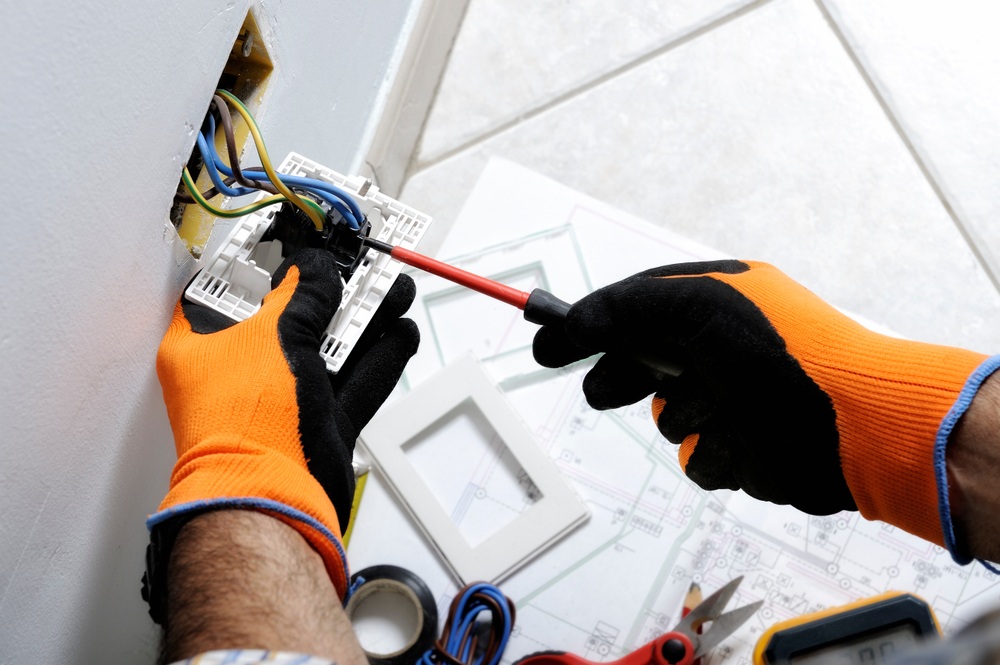
What are the signs you need a rewire?
Wiring ages quietly, and many of the signs are easy to put down to an appliance or a one-off fault. These are the signs you need a rewire that we see most often in Stafford homes:
- Scorch marks or discolouration around sockets, switches or the fuse box.
- A burning or fishy smell from an outlet or the consumer unit.
- Buzzing, crackling or humming from sockets, switches or the board.
- Frequent tripping or blown fuses with no obvious appliance fault.
- Flickering or dimming lights when something else switches on.
- Warm sockets or plugs, or discoloured faceplates.
- Old accessories: round-pin sockets, brown Bakelite switches, or a lack of earth on lighting circuits.
- Old cable and boards: rubber, lead or fabric-covered cable, or a fuse box with rewirable fuses and no RCD.
How can you tell how old your wiring is?
You can often get a rough idea without opening anything up. Rubber-insulated cable was used until around the 1960s and is well past its safe life. Black and red cables, instead of brown and blue, suggest wiring from before 2004. A fuse box with ceramic fuse carriers, or a mix of old and new boards, points to piecemeal changes over time.
None of that is a verdict. A house can have a mixture of old and newer wiring, and age is only one factor. Condition, protection and what has been added over the years all matter, which is why testing beats guessing.
Do you always need a full rewire?
No, and a good electrician will tell you so. Spotting the signs you need a rewire is not the same as needing one. Many problems that look like “the wiring has gone” turn out to be a worn-out board, a damaged circuit, or a few failed accessories.
- Targeted repairs when the cable is sound and only specific points are faulty.
- A consumer unit upgrade when the wiring is fine but protection is missing. See our guide to consumer unit replacement.
- A part rewire of the worst circuits, such as lighting or the ground floor.
- A full rewire when most of the cable is old, damaged or unsafe to leave.
What does a rewire involve, and how long does it take?
A full rewire is done in two stages. First fix runs new cables under floors and through walls and ceilings and fits the back boxes. Second fix fits the accessories, the consumer unit and light fittings, then tests and certifies the installation.
For a typical three-bedroom house this takes around five to ten working days, depending on size, access and whether plastering follows. Many people move out for part of it. Because a rewire is notifiable work, it is registered with building control as part of the job. See our Part P guide for what that means.
What affects the cost of a rewire?
We do not publish prices because every property is different, but the main factors are:
- the size of the property and the number of circuits and points
- how easy it is to get at the existing cable, for example solid floors and plastered walls
- the consumer unit and any extras such as smoke alarms, outside lighting or an EV charger supply
- whether you want surface or concealed wiring in finished rooms
We give a free written quotation after seeing the property, so the price and the scope are in one document. Find out more about rewires in Stafford.